
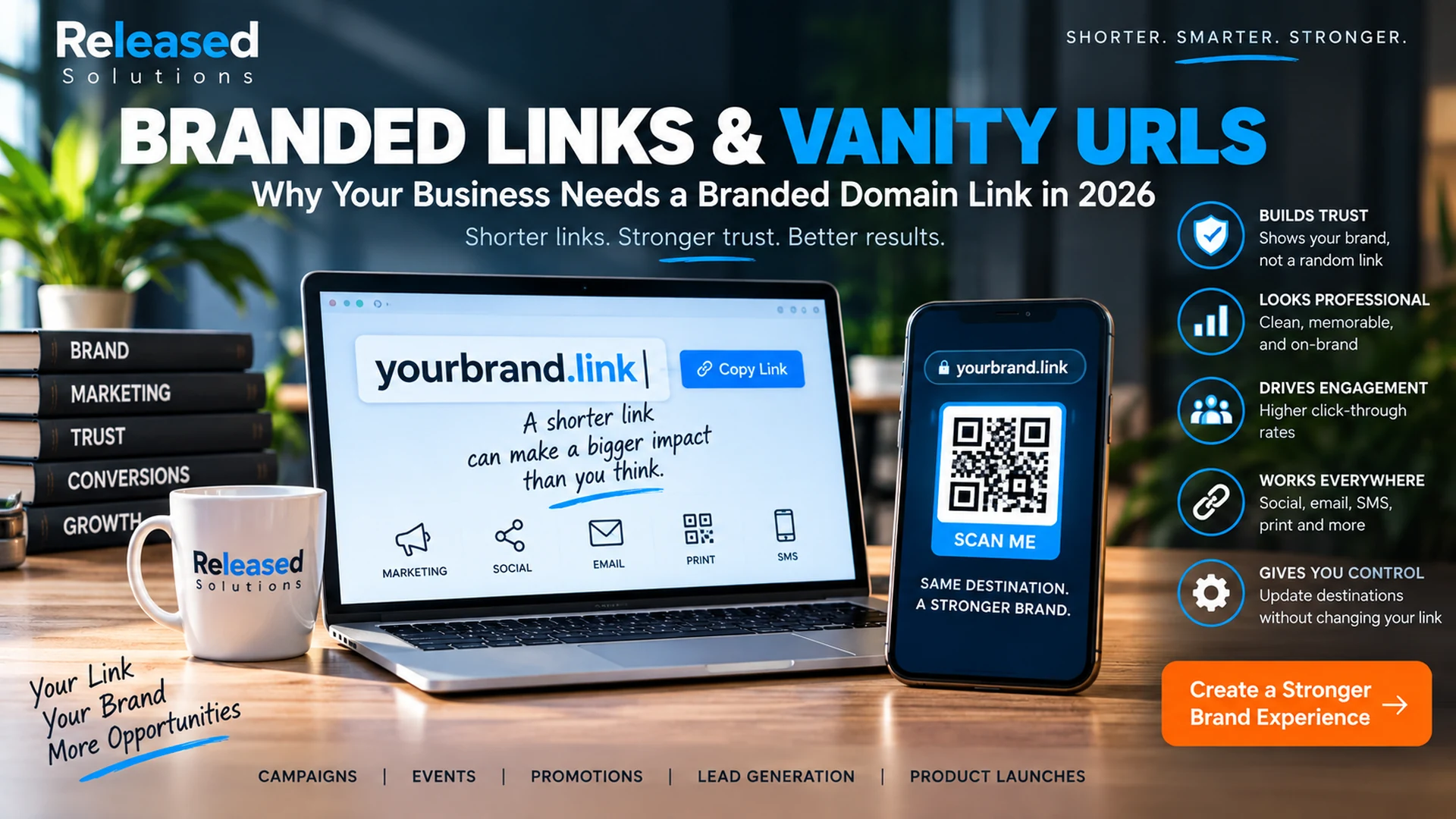

Branded Links and Vanity URLs in 2026: Why Your Business Needs a Branded Link Strategy
A branded link used to sound like a cosmetic marketing detail: take a long URL, shorten it, and make the result look cleaner.
In 2026, that description is too small.
Links now move between websites, social media, email, SMS, QR codes, print materials, presentations, influencer campaigns, offline events, automation systems, and AI-assisted workflows. A business may create hundreds or thousands of campaign links over time.
That makes the link itself part of the brand experience, measurement system, and marketing infrastructure.
A branded link is not just a shorter URL. It is a controlled connection between your brand, your campaign, and the destination you want the customer to reach.
What Is a Branded Link?
A branded link uses a domain controlled by your business rather than a generic shortener domain. It can also use a readable custom path (sometimes called the "back half"), so the link communicates something meaningful.
For example, a long campaign URL containing tracking parameters might be shared publicly as a short branded address such as yourbrand.link/guide. The short link redirects to the actual destination while the customer sees a cleaner, recognizable address.
A vanity URL is closely related. The term usually describes a short, memorable, and human-readable web address created for a campaign, product, event, or action. In practice, modern link-management platforms combine custom domains, custom paths, redirects, QR codes, and analytics into the same system.
The destination page can remain the same while the public-facing link becomes easier to recognize, remember, type, print, and manage.
Why Branded Links Matter More in 2026
Six reasons a controlled branded link is worth the small amount of setup work.
Your Brand Stays Visible
A generic shortener promotes the shortener's domain. A branded domain keeps your business visible in the link itself.
The Destination Feels More Understandable
A descriptive path such as /pricing, /event, or /guide can give the reader useful context before the click.
One Link Can Work Across Channels
The same controlled branded link can be used in social posts, email, SMS, print, presentations, and QR codes where appropriate.
Campaign Links Become Manageable Assets
Modern link platforms can tag, search, organize, update, and report on large collections of links instead of leaving them scattered across spreadsheets and old campaigns.
Measurement Can Begin at the Link
Click, location, device, and referrer data can help explain how a link is being used. Some platforms now connect link interactions with conversion events.
Destinations Can Change Without Reprinting the Public Link
Dynamic link management allows the destination to be updated while the public-facing branded link remains unchanged. Especially useful for print and QR-code campaigns.
Branded Links and QR Codes Are Now Part of the Same Strategy
QR codes have made link strategy relevant to physical marketing again. Menus, direct mail, signage, packaging, event displays, business cards, and printed promotions can all become entry points into a measurable digital journey.
Modern link-management platforms increasingly manage branded short links and QR codes together. Rebrandly, for example, associates branded links with QR codes and now reports QR scans separately from direct link clicks. Bitly similarly positions links and dynamic QR codes as connected campaign infrastructure.
The important point for a small business is not which QR generator looks best. It is whether the destination, branding, measurement, and future editing are being managed intentionally.
A printed QR code may stay in circulation for months or years. The ability to manage its destination can be more valuable than the ability to generate the code.
Use Branded Links to Keep Tracking URLs Out of the Customer Experience
Campaign measurement often requires UTM parameters or other tracking information. Those parameters are useful to analytics systems but can create long, unattractive URLs when exposed directly to customers.
A branded link can provide a cleaner public address while redirecting to the properly tagged destination. That lets the customer see a simple branded link while analytics receives the campaign information it needs. This does not replace good UTM governance. See digital marketing and paid advertising for the campaign side of that conversation.
Not a Replacement for Your Website URL
Your main website domain remains the authoritative home for the business. The branded link is a routing and campaign layer that helps customers reach specific destinations more cleanly.
Not a Google Ads Final URL
Google Ads requires the landing page and the display URL to share the same domain. Google's current policy warns that URL shorteners and redirects can create destination-mismatch problems. For Google Ads, use the direct landing-page URL as the final URL and use tracking templates / final URL suffix fields for measurement.
Not an SEO Ranking Boost
The SEO value of your website still depends on content, architecture, internal linking, crawlability, authority, and other search signals of the destination site. A branded redirect can help sharing and campaign management, but it is not an SEO shortcut. For internal links on your own site, point at the canonical URL, not through a shortener.
Where Branded Links Are Useful
| Channel | Example use | Why a branded link helps |
|---|---|---|
| Social media | Campaign, guide, event, or promotion | Cleaner presentation and easier campaign management |
| CTA or resource link | Readable link when the URL is visible; consistent tracking | |
| SMS | Short destination | Less visual clutter and a recognizable brand domain |
| Flyer, postcard, brochure, or signage | Easier to type and pair with a QR code | |
| Events | Booth, presentation, handout, or display | Memorable action link that can be reused |
| Video / podcast | Spoken call to action | A short human-readable URL is easier to say and remember |
| QR codes | Offline-to-online conversion | Managed destination and scan analytics where supported |
| Sales / CRM | Follow-up resources | Consistent links that can be organized and measured |
Branded Link Analytics Are Useful, but They Are Not Your Entire Attribution System
Link platforms can provide useful first-touch interaction data such as clicks, scans, geography, devices, and referrers. Some platforms now offer deeper conversion tracking as well.
That does not mean link analytics should replace GA4, CRM data, advertising-platform conversion data, or revenue reporting. A click tells you someone used the link. The business still needs to know what happened after the click.
Connect link data with landing-page conversions, CRM stages, purchases, bookings, calls, or other outcomes that actually matter. See 5 Steps to Improve Your Website Conversion Rate for the outcomes side.
AI Is Starting to Reach Link Management Too
The link itself is simple technology, but the systems around it are becoming more intelligent. In 2026, link-management platforms are adding AI-assisted creation and analytics. Rebrandly announced a Claude connector and MCP server that can work with live link data. Bitly describes AI-powered link creation and analytics among its current product capabilities.
For businesses, the more important trend is that links are becoming structured marketing data that automation and AI systems can query, organize, and evaluate.
Do Not Use a Short Link as a Google Ads Final URL
This one is worth restating on its own line. Branded short links can be excellent for social, SMS, email, print, and QR-code campaigns, but they should not be forced into every advertising environment.
A branded short link is a marketing asset. It is not permission to ignore the destination policies of an advertising platform. For Google Ads, use the direct landing-page URL as the final URL and let the platform's tracking template do the measurement.
Custom Domain
Your business owns the domain. If the tool goes away, the brand equity in the link does not go with it.
Editable Destinations
Change where a live link points without reprinting anything. Essential for QR codes and long-lived campaigns.
QR + Link Together
Managed QR codes and branded links in the same platform. Scans and clicks reported side by side.
Export & Portability
You can leave the vendor with your link history intact. Nothing important is trapped inside their dashboard.
Own the Domain Even If You Do Not Own the Software
This is one of the most important decisions in a branded-link strategy.
The link-management platform may be a third-party service, but the branded domain should normally be an asset the business controls. That makes it easier to change providers later without abandoning the public identity that has been printed, shared, and remembered.
Document DNS settings, ownership, access, and renewal responsibility just as you would for the primary business domain. This is part of the same governance discussed in Online Presence Management.
What to Look for in a Branded Link System
Ten baseline capabilities to evaluate before you commit to a platform.
Create a Link Governance Standard Before You Have Hundreds of Links
A few simple rules, agreed to before the volume ramps up, will save weeks of cleanup later.
| Decision | Example rule |
|---|---|
| Domain | Use one approved branded short domain for corporate marketing. |
| Path naming | Use lowercase, readable campaign paths whenever practical. |
| UTMs | Use a documented source / medium / campaign naming standard. |
| Ownership | Assign a campaign or department owner. |
| Expiration | Expire temporary promotions when appropriate. |
| Destination changes | Document who can edit live destinations. |
| QR codes | Generate managed QR codes from the approved link system. |
| Reporting | Review link activity alongside website and CRM outcomes. |
| Archiving | Tag completed campaigns instead of leaving anonymous links. |
Branded Link Examples
A restaurant might use a memorable branded link for a seasonal catering menu and place the same destination behind a QR code on printed materials.
A service business might use a branded link for a consultation campaign shared through social media and SMS, while preserving UTMs on the destination for analytics.
A conference exhibitor might print one short event link on signage, then update the destination after the event from an appointment page to a follow-up resource.
A sales team might maintain standardized branded links for case studies, booking pages, and service guides so everyone shares the same controlled destinations.
Do Branded Links Improve SEO?
No. Do not adopt a branded short-link system because someone promises that shorter links will improve organic rankings.
The SEO value of your website still depends on the content, architecture, internal linking, crawlability, authority, and other search signals of the destination site. A branded redirect can be useful for sharing and campaign management, but it is not an SEO shortcut.
For links you control on your own website, link directly to the canonical destination rather than routing ordinary internal links through a shortener.
The 2026 Takeaway: Treat Links as Infrastructure
The reason to use a branded link is no longer simply that bit.ly looks less professional than your own domain.
A modern branded-link system can connect brand recognition, readable campaign URLs, QR codes, destination management, UTMs, analytics, automation, and governance.
But the tool only becomes valuable when the business has a strategy for how links are created, named, measured, maintained, and retired.
Last fact-check: September 2026
Turn Your Links Into a Managed Marketing Asset
Released Solutions helps businesses connect websites, campaigns, analytics, automation, and online presence into systems that are easier to manage and measure.
If your team is dropping raw bit.ly links into a dozen channels without a system behind them, we can help you build the governance and measurement layer around them.
Treat the link like infrastructure. Manage it like a brand asset.
Kenneth Durrum, Released Solutions