

Can Your Business Count on Social Media Views in 2026?
Years ago, Released Solutions published a simple warning for businesses looking at social media video reports: the number beside a video should not automatically be interpreted as the number of people who watched the entire video. That warning is even more important now.
Platforms have changed their video products, renamed metrics, added replays, expanded short-form video and changed the point at which playback becomes a reported view. In August 2026, YouTube began counting a view when a video starts to play across Shorts, long-form video and live streams, while keeping separate engaged-view and engaged-watch-time measures for monetization and eligibility.
The old article challenged the idea that a displayed video-view count represented people who watched 100 percent of a video. That conclusion still holds. Today, a business should separate exposure, playback, attention and action.
Reach and impressions help describe exposure. Plays or views tell you that the platform registered playback. Watch time, retention and completion metrics tell you more about attention. Clicks, leads, purchases, bookings, calls and other conversion events tell you whether the attention moved the business forward.
A displayed video-view count is a platform-defined playback event, not proof of a unique person who watched the entire video. Separate exposure, playback, attention and action before you judge whether the video worked.
Why Cross-Platform View Counts Are Not Apples to Apples
A thousand views on one platform cannot automatically be treated as equivalent to a thousand views on another. Platforms use different definitions, surfaces and reporting systems. Even within the same platform, an organic video, a Reel, a Short and a paid video campaign can expose different metrics.
| Platform | 2026 measurement note | Better signals |
|---|---|---|
| Facebook / Instagram | Reels-centered ecosystem. Replays can contribute to Reels plays. Facebook has been moving video publishing into Reels. | Reach, watch time, retention, replays, engagement, conversions |
| Organic views count after more than 2 seconds. Video ads use 2 continuous seconds while at least 50% is on screen. | Watch time, 25/50/75% views, completions, clicks, leads | |
| YouTube | As of August 2026, a view counts when playback starts across formats. Engaged views and watch time remain separate for monetization and YPP. | Engaged views, watch time, average view duration, retention, conversions |
| TikTok | Total views alone do not describe attention. Analytics include average watch time and paid focused / completion metrics. | Average watch time, focused views, completion, engagement, conversions |
| Snapchat Ads | A 2-second view can qualify after 2 consecutive seconds or a click. 15-second views and quartiles are also reported. | 15-second views, quartiles, completions, average screen time, ROAS |
Definitions and interfaces change frequently. Reverify current metric definitions with each provider before making budget decisions.
Exposure vs Attention
Reach and impressions describe how many people could have seen the video. Plays and views say the platform registered playback. They are not the same measure.
Playback vs Watched
Watch time, retention and completion milestones (25 / 50 / 75%) show what actually happened after playback started. A view alone will not tell you.
Attention vs Action
Clicks, leads, calls, bookings, purchases and follow-up actions are the metrics that tell you the video did something for the business.
Measure the Progression, Not a Single Metric
What Businesses Should Measure Instead of Chasing the Biggest View Number
Read video performance as a progression instead of one isolated metric. Ask whether the content reached the right audience. Then ask whether people started it, whether they stayed, whether they engaged, and whether the video created a meaningful next step in your marketing funnel.
REACH AND UNIQUE AUDIENCE
How many distinct people did the content reach? A better audience-size signal than a raw play count that may include replays.
WATCH TIME
How much time did people actually spend with the video? Total time watched matters more than how many playbacks started.
AVERAGE WATCH TIME
Compare the average with the total video length. It tells you whether the hook, pacing and length worked for the audience.
RETENTION
Where do viewers leave? Retention can show whether the opening worked and whether the strongest message arrived too late.
COMPLETION OR DEEPER-VIEW MILESTONES
25%, 50%, 75% and near-complete views distinguish a passing play from deeper consumption when available.
ENGAGEMENT QUALITY
Comments, shares, saves, reactions and profile visits show that someone did more than let the video play.
CONVERSION
Did the video produce a click, lead, call, booking, purchase or another meaningful next step? This is the metric that pays the marketing bill.
A Better 2026 Video Measurement Framework
REACH the right audience. PLAY starts the counter. WATCH shows how much time and how far. ENGAGE shows the message landed. ACT is any meaningful next step. CONVERT is the business outcome.
A video with fewer total views can be more valuable if it reaches the right audience, holds attention longer and produces more qualified actions. A video with a large play count but weak retention and no next-step activity may simply be good at starting.
The First Seconds Still Matter, but the Goal Is Not Just to Earn a View
Short-form feeds make the opening seconds critical. Your first frame, opening statement, motion, visual contrast and subject choice all influence whether someone continues. But optimizing only to cross a platform's view threshold can produce the wrong behavior. The better goal is to earn enough attention to communicate the idea and move the right viewer toward the next step in your digital marketing system.
Revisiting the Original Released Solutions Examples
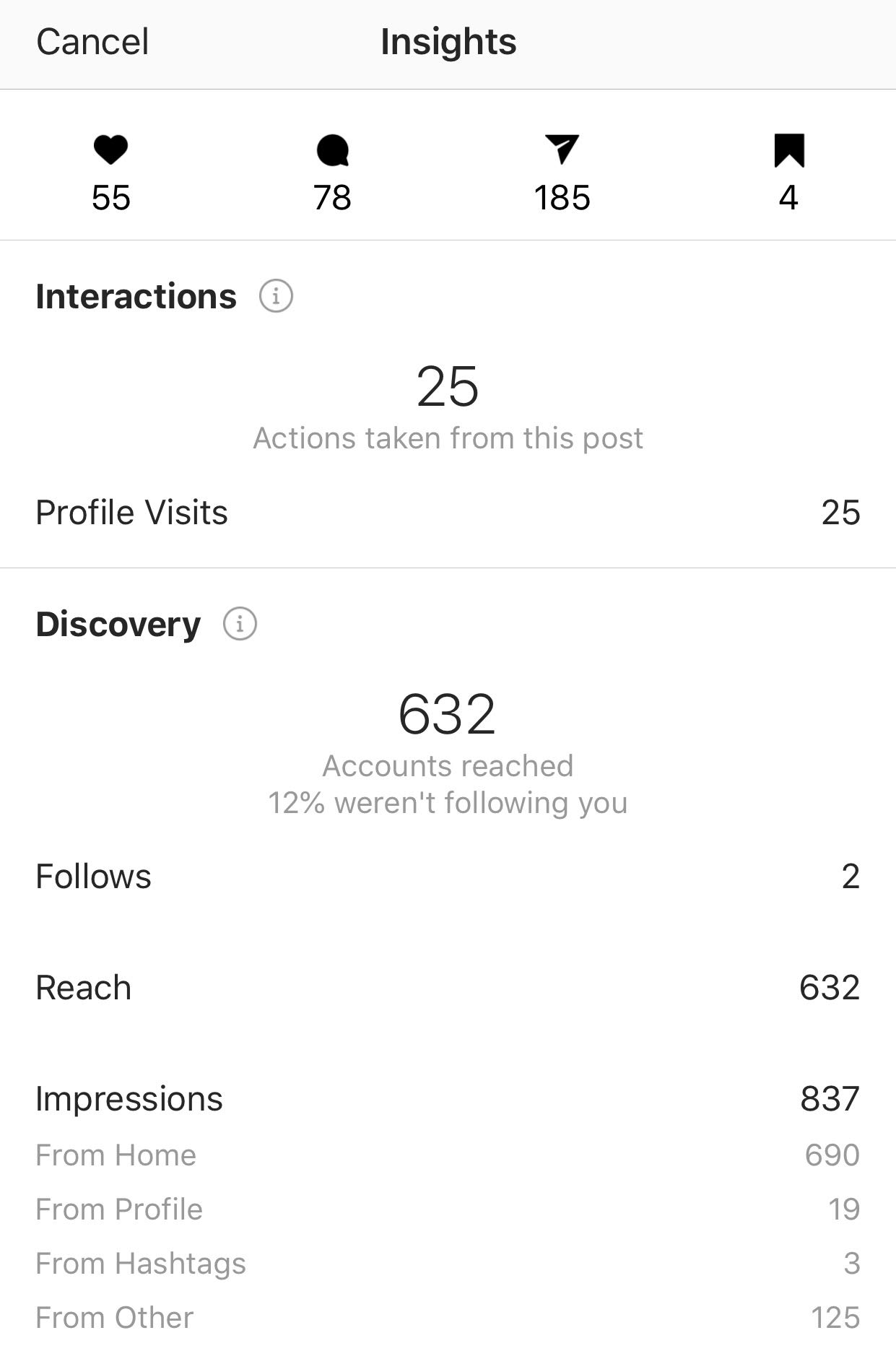
The screenshots below were included in the original 2024 version of this article. They are useful historically because they demonstrate the central lesson: the headline number and the deeper analytics can tell very different stories. They should not be reused as a current platform-specification chart because interfaces, terminology and definitions have changed.

Reach
Did the right people even see it? Unique audience matters more than raw impressions.
Watch
Watch time, average watch time and retention describe attention. Playback alone does not.
Engage
Comments, shares, saves and profile visits are stronger signals than a passive play.
Convert
Clicks, leads, calls, bookings and purchases are the metrics that pay the marketing bill.
What I Would Put on a Weekly Video Report
For most small businesses, I would not lead a weekly report with views alone. I would show:
- Reach and unique audience
- Views or plays
- Average watch time
- Retention or completion where available
- Meaningful engagements (comments, shares, saves)
- Traffic or profile actions attributable to the video
- Conversions the video is meant to influence
- Cost metrics when the video is paid media
Then I would compare those numbers against the objective of the content, not against a generic view benchmark.
Not "How many views did we get?" but "What happened after the video started?"
The Takeaway
Can your business count on social media views? Yes, but only if you understand what the platform is counting.
Views are useful as an early attention signal. They are not proof that a person watched the full message, and they are not a substitute for unique reach, watch time, retention, engagement or conversion data.
The smarter question is not "How many views did we get?" It is "What happened after the video started?"
Turn Video Attention Into Measurable Business Results
Released Solutions helps small businesses connect content, paid media, analytics and conversion tracking so marketing decisions are based on more than surface-level numbers.
If your team is still weighing success by a headline view count, we can help you build the measurement, reporting and attribution stack around it.
A view is not a viewer. Measure what happened after playback started.
Kenneth Durrum, Released Solutions