
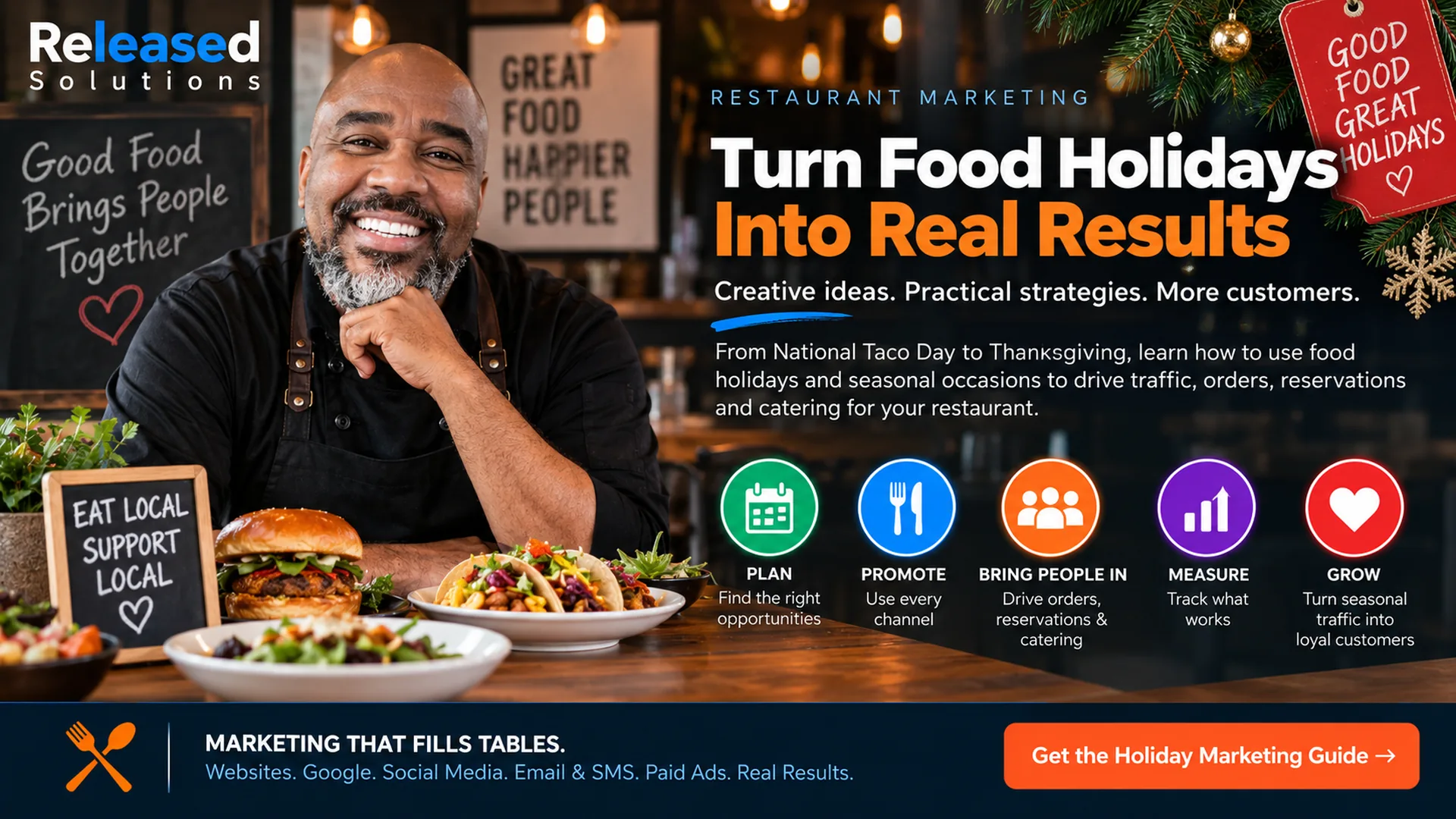

How Restaurants Can Use Food Holidays to Drive Traffic, Orders and Reservations
Restaurants have no shortage of reasons to promote something. National Taco Day. National Pizza Month. Valentine's Day. Mother's Day. Thanksgiving. Christmas parties. New Year's Eve.
The problem is that too many restaurants treat those occasions as content ideas instead of business opportunities.
Posting "Happy National Burger Day" may earn a few reactions. A campaign connects the occasion to an offer, a customer, a conversion path, and a measurable result.
Stop Chasing Every Food Holiday
There are hundreds of food-related observances online, and different calendars sometimes disagree about dates or origins. A restaurant does not need to celebrate all of them.
Choose occasions that make sense for what you actually sell. A pizzeria has a natural reason to build around pizza occasions. A steakhouse may get more value from Father's Day, holiday parties, and New Year's Eve. A bakery may have an entirely different calendar.
The objective is relevance, not calendar volume.
The Restaurant Holiday Marketing Framework
Six steps, in the order I use them when a restaurant asks how to make more of a seasonal moment.
PICK
Choose an occasion that naturally fits your menu, customers, and brand. Do not force a food holiday simply because it exists on a calendar.
PACKAGE
Turn the occasion into a real offer: a limited-time item, prix fixe menu, bundle, catering package, loyalty reward, reservation experience, or seasonal special.
PREPARE
Build the photography, menu updates, landing page, ordering or reservation links, tracking, and staff instructions before promotion begins. Never promote what the operation cannot deliver.
PROMOTE
Use the channels your customers actually use: website, Google Business Profile, social media, email/SMS, paid media, and in-restaurant promotion.
CONVERT
Give people an obvious next step: Reserve a Table, Order Online, View the Holiday Menu, Buy a Gift Card, or Order Catering. Match the button to the intent.
MEASURE
Track reservations, orders, revenue, promo usage, new customers, list growth, advertising performance, and repeat visits. If you cannot measure it, you cannot repeat it.
Build a Restaurant Marketing Opportunity Calendar
Instead of depending on outside holiday websites, build a calendar around occasions that can actually affect your restaurant. Use food-holiday sites as idea sources, then verify dates before committing media, creative, or inventory.
| Month | Potential restaurant opportunities |
|---|---|
| January | New Year, Dry January, healthy choices, comfort food, soups, seasonal resets |
| February | Valentine's Day, Super Bowl and watch parties, pizza, chocolate, cocktails and mocktails |
| March | St. Patrick's Day, spring menus, tournament watch parties, seasonal specials |
| April | Easter, brunch, spring dining, grilled cheese, seasonal produce |
| May | Cinco de Mayo, Mother's Day, graduation, burgers, barbecue, catering |
| June | Father's Day, summer dining, seafood, outdoor dining, group occasions |
| July | July 4th, grilling, hot dogs, ice cream, wings, summer gatherings |
| August | Back-to-school, sandwiches, peaches, family meals, late-summer promotions |
| September | Labor Day, football season, pizza, tailgating, Hispanic Heritage where appropriate |
| October | Halloween, National Pizza Month, tacos, desserts, fall menus, catering outreach |
| November | Thanksgiving, Friendsgiving, catering, take-home meals, sandwiches, holiday-party booking |
| December | Holiday parties, catering, gift cards, desserts, Christmas, New Year's Eve, January pre-booking |
Restaurant Holiday Marketing Planner
The one-page framework, 12-month opportunity calendar, and campaign checklist we use to plan restaurant holiday campaigns. Free download, no form.
Impulse Offers
Small, low-commitment plays: a limited-time menu item, a happy hour twist, a "today only" special. Lead time measured in days. Post it Monday, run it Friday.
Reservation Events
Valentine's Day dinner, Mother's Day brunch, prix fixe nights, ticketed specials. People need time to plan and book. Start promoting weeks ahead, and email your existing list first.
Catering and Major Commitments
Thanksgiving catering, office holiday parties, private dining, corporate accounts. Buyers make these decisions weeks to months in advance. Start earlier than feels comfortable, and reach past customers directly.
Use More Than Social Media
Small impulse offer = days. Reservation event = weeks. Catering, private dining, and major holiday commitments = several weeks or months. Match the campaign lead time to the customer commitment.
A restaurant holiday campaign should not live only in an Instagram or Facebook post. Build the campaign across the places where customers discover, evaluate, and act.
Website
Create a holiday menu, landing page, catering page, or reservation page that clearly explains the offer and next step. Support this with good online presence management.
Google Business Profile
Keep hours, menu information, photos, and links current. Google currently supports restaurant menus, online ordering, reservations, and Business Profile posts for offers, updates, and events.
Social Media
Use organic content for awareness, appetite appeal, behind-the-scenes stories, and reminders. Do not confuse engagement with revenue.
Email and SMS
Reach people who already know the restaurant. Use SMS only where appropriate and with proper consent.
Paid Media
Use paid search and social advertising when controlled distribution, geographic targeting, retargeting, or measurable demand generation is needed.
Ordering and Reservations
Make the conversion path frictionless. Do not promote a holiday offer without confirming that ordering, reservations, inventory, and staff can support it.
In-Restaurant
Use table tents, receipts, signage, servers, QR codes, and packaging to promote the next occasion to customers already dining with you. This is often the highest-converting channel, and the cheapest.
Restaurant Marketing Checkup
What's really keeping tables empty?
Answer 15 quick questions to find the three marketing problems costing you the most guests, and see how your Google reviews compare with local competitors.
Website Landing Page
One URL per campaign. Menu, offer, hours, ordering or reservation button, tracking pixel.
Google Business Profile
Post the offer, refresh photos, verify hours. Where most local intent actually starts.
Email + SMS
Best ROI channel for existing customers. Segment by past order type and location.
In-Restaurant
Table tents, receipts, packaging, and QR codes to promote the next occasion to current guests.
Holiday Marketing Ideas That Create a Business Outcome
Not every occasion needs a full campaign. Pick one or two of these formats that fit the moment, and build the rest of the promotion around whichever one you choose.
Measure What Happened After the Post
The marketing is not finished when the creative is published.
Track what the campaign was supposed to produce: reservations, orders, catering inquiries, gift-card sales, coupon use, new email or SMS subscribers, website conversions, ad results, and repeat visits.
If the restaurant cannot connect the campaign to a business outcome, it is difficult to know what deserves more investment next time.
A Note About Food-Holiday Calendars
Food-holiday websites are useful for brainstorming, but they should not become the strategy. Some observances are promotional creations rather than official government holidays, and dates can vary between sources.
Use these resources to discover ideas. Verify the date. Then decide whether the occasion deserves a campaign for your restaurant.
The Takeaway: Build Campaigns, Not Calendar Posts
Restaurants already have something most businesses work hard to create: moments people naturally want to share.
Food holidays and seasonal occasions give you additional reasons to create those moments, but the business value comes from what you build around them.
Pick the right occasion. Package a compelling offer. Prepare the experience. Promote it across the right channels. Make conversion easy. Measure the result. Then use what you learned to make the next campaign better.
Restaurant Holiday Marketing Planner
The one-page framework, 12-month opportunity calendar, and campaign checklist we use to plan restaurant holiday campaigns. Free download, no form.
Planning Your Restaurant's Holiday Marketing?
Released Solutions helps restaurants connect seasonal offers with websites, Google presence, social media, paid advertising, email/SMS, online ordering, reservations, and conversion tracking.
If your seasonal marketing has been social-only or last-minute, we can help build a repeatable campaign system around it.
From restaurants here in South Florida to businesses marketing across the country, the opportunity is the same:
Turn seasonal attention into measurable customer action.
Kenneth Durrum, Released Solutions