

How People Find Your Content in 2026: SEO, AI Discovery, AEO, GEO, SXO and Beyond
When I originally wrote about seven ways people find content on a website, the basic idea was that creating content was only part of the job. People still had to discover it. That principle has aged very well. What changed is the number of discovery layers between the business and the customer.
Traditional Google search still matters. Social media still matters. Email, referrals, advertising and direct traffic still matter. But people now also discover businesses through AI Overviews, AI Mode, ChatGPT, Microsoft Copilot, conversational assistants and AI agents that retrieve, summarize and cite information from the web.
I no longer think about content as something that lives on a website waiting to be found. I think about it as a business asset that needs to be discoverable, understandable, trustworthy and useful across multiple systems.
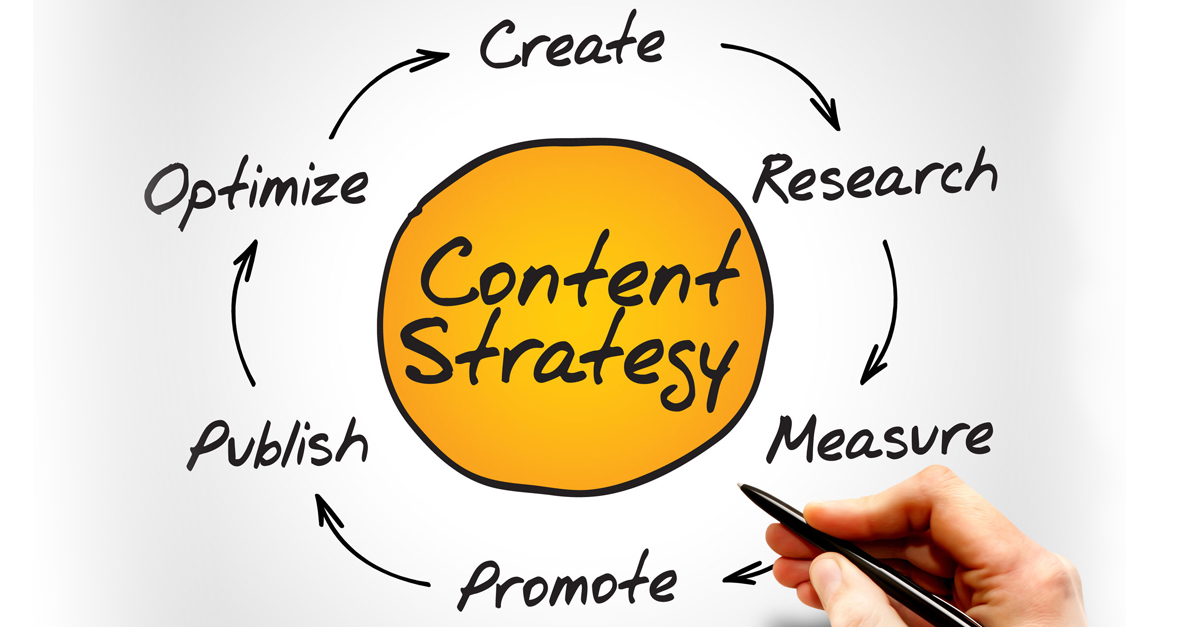
My framework is: CREATE → OPTIMIZE → DISTRIBUTE → EXPERIENCE → MEASURE → IMPROVE.
That is the modern discovery question. The answer decides whether great content becomes a business asset or an unread page.
SEO, AEO, GEO and SXO: Different Lenses on the Same Customer Journey
The marketing industry now uses several acronyms to describe different parts of content discovery. See SEO, AEO, GEO, AIO and SXO for a fuller breakdown. I find these labels useful when they help us think more clearly. I do not treat them as four unrelated marketing systems.
| Acronym | What it emphasizes |
|---|---|
| SEO | Search engine optimization: the technical and content foundation for earning visibility in search. |
| AEO | Answer engine optimization: making content useful in answer-oriented experiences and voice. |
| GEO | Generative engine optimization: how content participates in generative AI answers, citations and grounded responses. |
| SXO | Search experience optimization: the page and journey after the click, not just the discovery event. |
SEO is part of the infrastructure AI discovery is being built on. Google says optimizing for its generative AI Search is still grounded in established SEO best practices.
Discovery, Not Traffic
A citation or snippet in an AI answer is discovery. Not every discovery becomes a click, and that is fine as long as the business system captures value elsewhere.
System, Not Channels
SEO, social, email, paid, voice and AI answer engines feed the same customer journey. Treating them as separate marketing systems creates gaps.
Non-Commodity, Not More
AI made commodity content easier to produce. That makes original experience, analysis and point of view more valuable, not less.
CREATE, OPTIMIZE, DISTRIBUTE, EXPERIENCE, MEASURE, IMPROVE
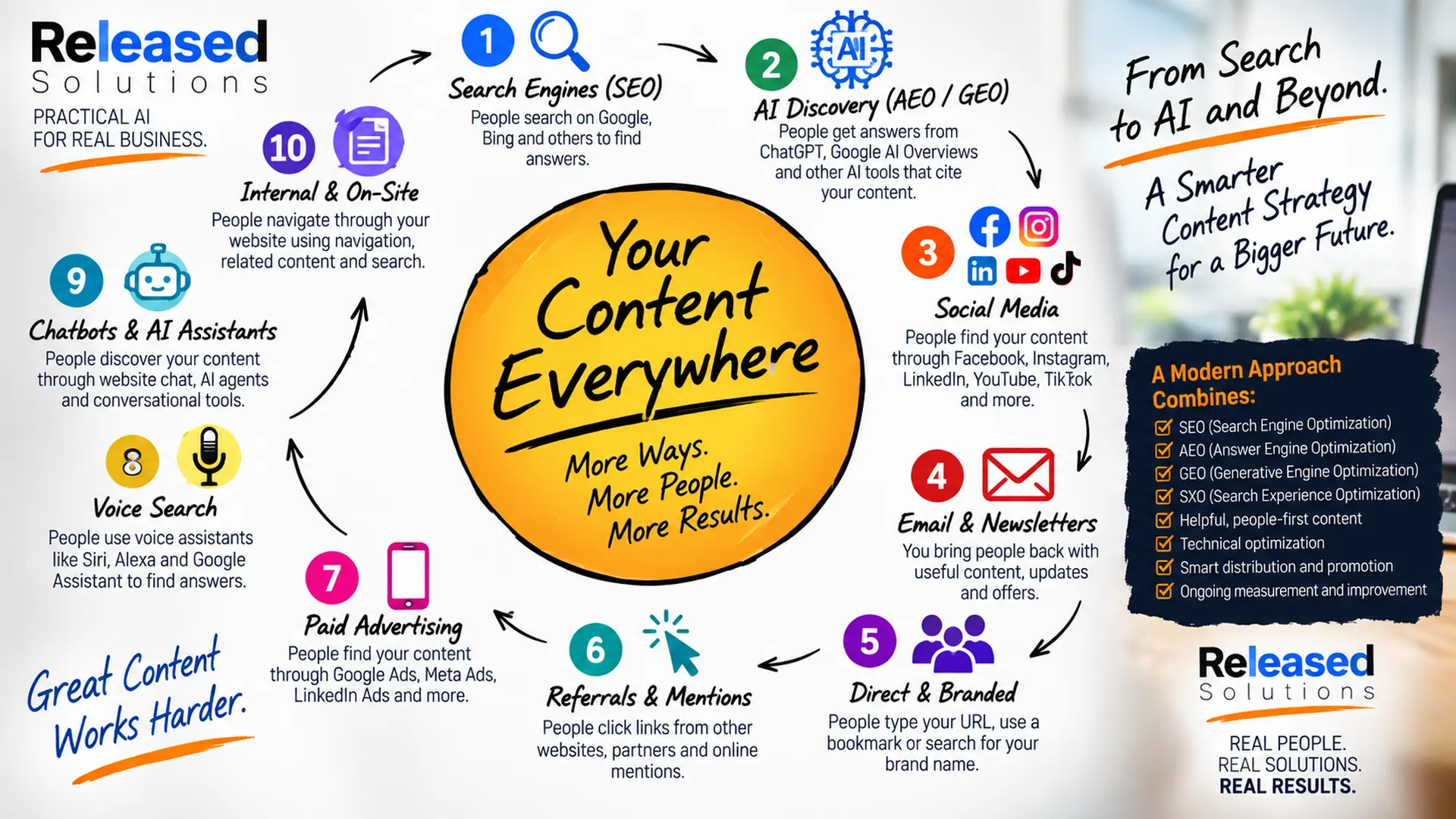
Eleven Ways Content Actually Gets Discovered in 2026
SEARCH ENGINES: SEO IS STILL THE FOUNDATION
People still search Google, Bing and other search engines for products, services, answers and local businesses. The fundamentals still matter: crawlability, indexing, useful content, titles, internal linking, canonicalization, structured data where appropriate, page experience and a technically healthy website. See Google ranking factors for the current picture. A great article that is not indexed is not a search asset. SEO is not obsolete because AI arrived: SEO is part of the infrastructure AI discovery is being built on.
AI DISCOVERY: YOUR CONTENT CAN BECOME PART OF THE ANSWER
People increasingly ask AI systems questions instead of beginning every information journey with a list of blue links. Google's AI Overviews and AI Mode can surface links to web content. ChatGPT Search can discover and cite public websites. Microsoft Copilot and Bing AI experiences can cite publisher pages as grounding sources. Your content may be discovered before someone ever visits your website. OpenAI says public websites can appear in ChatGPT Search, recommends allowing OAI-SearchBot for eligibility, and ChatGPT referral links include a chatgpt.com UTM source. See AI citations and GA4 conversions for how to watch those in analytics.
AEO: CREATE CONTENT THAT CAN ACTUALLY ANSWER SOMETHING
Answer-oriented discovery rewards clarity. That does not mean writing robotic FAQ pages or chopping every article into tiny fragments for machines: Google specifically says there is no requirement to chunk content for its generative AI features. It means knowing the questions customers actually ask and answering them clearly. State the question, explain the answer without unnecessary delay, add context and limitations, provide examples, support important claims, use descriptive headings and explain what the reader should do next.
GEO: GIVE GENERATIVE SYSTEMS SOMETHING WORTH CITING
Generative engine optimization becomes interesting when we stop looking for tricks and start asking why one source deserves to be referenced. Google's 2026 guidance emphasizes valuable, unique, non-commodity content and recommends bringing original experience and a useful point of view rather than restating information that is already available everywhere else. Microsoft's new Bing Webmaster Tools AI Performance reporting similarly encourages publishers to strengthen expertise, improve structure and clarity, support claims with evidence and keep information current. AI has made commodity content easier to create, which makes non-commodity content more valuable.
SOCIAL MEDIA: DISCOVERY OFTEN HAPPENS BEFORE SEARCH
Facebook, Instagram, LinkedIn, YouTube, TikTok and other social platforms remain major discovery environments. A person may see a post, video, comment or shared article long before they search for the business. Social discovery can create the awareness that later becomes a branded search, website visit, email signup or AI question. See social media content saturation for why judging social content only by immediate website clicks understates its role.
EMAIL AND NEWSLETTERS: DISCOVERY CAN COME BACK TO YOU
Not all discovery has to be rented from an algorithm. Email gives a business a way to bring people back to useful content after the initial relationship has been established appropriately. A strong article can become a newsletter topic. A newsletter can send readers to a deeper guide. A guide can create a conversation, lead or sale. Owned audiences remain valuable in an AI-heavy marketing environment: search and social introduce people, and email helps continue the relationship.
DIRECT AND BRANDED DISCOVERY: SOMETIMES THEY ALREADY KNOW YOU
People also discover content because they already know the business. They type the URL, use a bookmark, search the company name, return to something they saw earlier or ask an AI assistant specifically about the brand. Brand building and content discovery are connected. The stronger the business becomes as a known entity, the less every visit depends on winning a generic keyword at exactly the right moment.
REFERRALS, MENTIONS AND CITATIONS: OTHER SOURCES CAN INTRODUCE YOU
Links and mentions from other websites, partners, directories, media, associations and communities can send direct visitors and help establish context around the business. In the AI era, citations add another dimension. Microsoft's Bing Webmaster Tools now includes AI Performance reporting that shows citations, cited pages and sample grounding queries across supported AI experiences. A page can have value not only because it ranks, but because it becomes a source used to construct an answer.
PAID ADVERTISING: SOMETIMES YOU CREATE THE DISCOVERY
Google Ads, Meta Ads, LinkedIn Ads and other paid channels let businesses put useful content, offers and landing pages in front of audiences instead of waiting for organic discovery. Paid discovery works best when it connects to the same content and customer journey as the organic strategy: advertising introduces the business, retargeting reinforces the message, content answers objections, CRM continues the follow-up, and analytics shows what happened next. Paid and organic discovery should inform each other.
VOICE, CHATBOTS AND AI AGENTS: DISCOVERY IS BECOMING CONVERSATIONAL
Voice assistants, website chatbots, AI customer agents and browser agents add another discovery layer. People increasingly expect to ask for what they want instead of navigating a menu of pages. Google's current generative AI guidance even discusses emerging agentic experiences, where browser agents may inspect page structure, accessibility information and visual renderings to complete tasks for users. That creates a new reason to care about clear structure, accessibility, useful business information and functional website experiences.
ON-SITE DISCOVERY: SXO BEGINS AFTER THE CLICK
Getting someone to the website is not the end of discovery. People still need to find the next useful thing. Can they understand the page? Can they find related information? Can they navigate easily on mobile? Can they tell what you want them to do next? Does the page load well? Does the form work? Can they call, book, buy or ask for help? Internal links, related content, menus, calls to action, website search, chat and good information architecture help visitors continue discovering the business after the first landing page.
First-hand experience, original analysis, a business case, a useful framework, a comparison based on real work, current data, clear technical instructions, a point of view that adds something beyond the generic answer.
How I Measure Content Discovery Now
I do not want to measure content discovery with one report. I look across the system. Google has rolled out dedicated Generative AI performance reporting in Search Console. Microsoft introduced AI Performance reporting in Bing Webmaster Tools in 2026, including total citations, cited pages, grounding queries and visibility trends across supported AI experiences.
| Signal source | What it tells you |
|---|---|
| Google Search Console | Search performance, indexing, schema, technical issues and the new generative AI performance report. |
| Bing Webmaster Tools | AI Performance reporting with citations, cited pages, grounding queries and visibility trends. |
| GA4 | Traffic sources including AI referrals, landing pages, engagement and conversion behavior. |
| CRM and business outcomes | Leads, calls, bookings, purchases, qualified opportunities and customer value. |
The measurement chain I care about is: DISCOVERY → VISIT → ENGAGEMENT → ACTION → CONVERSION → VALUE. That is how we keep AEO, GEO and SEO from becoming vanity-metric conversations.
What You Do Not Need for Google AI Search
AI discovery has created plenty of new advice, and not all of it is useful. Google's current guidance is unusually direct about several misconceptions.
Google says llms.txt is ignored for Search, no special AI structured data is required, content does not need to be chunked artificially, and pages do not need to be rewritten solely for AI systems. Structured data still matters for traditional Search features and understanding, but hacks promising instant AI visibility should be treated with caution.
This is why I prefer fundamentals over hacks. Building the underlying content, technical health and business value is a better long-term investment than chasing the current AI-optimization myth.
A Modern Content Discovery Framework
I would replace the old seven-way checklist with a continuous system.
CREATE
Build useful, original content around real customer needs and real expertise.
OPTIMIZE
Make it technically discoverable and easy for people, search engines and AI systems to understand.
DISTRIBUTE
Use search, social, email, advertising, partners and other channels to put it in front of people.
EXPERIENCE
Make the page useful after discovery. SXO, conversion paths and customer experience live here.
MEASURE
Use Search Console, Bing Webmaster Tools, GA4 and business systems to understand visibility and outcomes.
IMPROVE
Update weak content, correct technical issues, add original value and respond to what the data shows. See online presence management for how this fits into the broader system.
Search + AI
Google, Bing, AI Overviews, AI Mode, ChatGPT, Copilot: SEO fundamentals feeding modern discovery layers.
Social + Email
Social introduces, email continues the relationship. Owned audiences balance rented reach.
Voice + Agents
Voice assistants, chatbots and browser agents that may reach the page before the customer does.
Experience + Value
SXO, conversion paths, CRM and analytics that turn discovery into actual business outcomes.
The Takeaway
People have more ways to find your content than they did when I wrote the original article. That does not make the fundamentals less important. It makes the connections between them more important.
SEO helps establish discoverability. AEO helps us think about useful answers. GEO helps us think about citations and generative discovery. SXO makes sure the experience after discovery is worth having. Social, email, referrals and paid media expand distribution. Analytics and CRM tell us whether any of it created value.
Great content should not just sit on your website. It should work everywhere.
Want Help Making Your Content Easier to Find and More Likely to Convert?
Released Solutions helps small businesses connect SEO, technical website health, AI discovery, content strategy, analytics and conversion measurement. Kenneth can help identify where content is being found, where it is being missed and what should be improved next.
Want Help Making Your Content Easier to Find and More Likely to Convert?
Released Solutions helps small businesses connect SEO, technical website health, AI discovery, content strategy, analytics and conversion measurement. Kenneth can help identify where your content is being found, where it is being missed and what should be improved next.
Content that can be discovered, understood, trusted and acted on. That is the whole job.
Kenneth Durrum, Released Solutions